Beyond Uniforms: Nigerian Volleyball Leagues And The Need For Sponsors

Nigerian volleyball needs money to grow. That is not a controversial statement. Running a volleyball team costs money, and the problem becomes obvious when private clubs have to find their own way through registration, transportation, accommodation, feeding, equipment and other expenses that come with competing at a serious level.
Yet, when you look at the teams that have been able to remain competitive at the highest level, military and paramilitary institutions feature prominently. Nigeria Customs, the Army, the Navy, the Airforce, the Police and the Nigeria Security and Civil Defence Corps have all invested in teams that compete in the national league. Their involvement has provided opportunities for players and helped keep the league competitive, but it also tells us something about the state of sponsorship in Nigerian volleyball.

The question is not whether these institutions should continue supporting the sport. They should. The bigger question is why more companies and private organisations are not doing the same, particularly at the grassroots and private-club level.
The answer is not difficult to find. Volleyball costs money, and most private clubs simply do not have enough of it.
A club that wants to compete seriously has to worry about registration, kits, balls and other equipment, transportation, accommodation, feeding, medical care, court rental and the many other expenses that come with keeping a team active. For a grassroots club, these costs can become a problem long before the players are good enough to attract serious attention. A coach may have talented players, but talent does not pay for a trip to another state or replace worn-out equipment.

This is where institutional teams have a major advantage. They already have an organisation behind them. A player who joins one of these teams may not only be joining a volleyball club but also gaining access to employment, regular income and a level of stability that most private clubs cannot provide. That makes these teams attractive to players, and understandably so.
The problem is what happens before a player gets there.
A young player may start with a private club or grassroots academy, spend years training and eventually become good enough to attract attention from one of the better-funded teams. The institutional team gets a stronger player, while the smaller club that helped develop that player is often left to start the process again. There is nothing wrong with a player moving to a better opportunity. That is part of sport. The bigger question is why so many smaller clubs struggle to build something sustainable in the first place. This is where sponsorship needs to enter the conversation.

When people talk about sports sponsorship, the discussion often starts with the biggest teams and the biggest competitions. That makes sense from a commercial point of view, but volleyball also needs investment much earlier in the process. Grassroots clubs, private academies and smaller teams need support to train properly, compete regularly and keep their players around long enough to develop.
A company does not necessarily have to own a volleyball team to make an impact. It could support an academy, provide equipment, fund a club's participation in competitions, help with transportation or sponsor a youth tournament. It could even support the development of courts in communities where young players currently have nowhere decent to train. Those forms of support may not receive the same attention as putting a company name on a Premier League jersey, but they address some of the problems that affect the sport much earlier.
There is also a bigger issue here. If private clubs cannot survive without depending on the occasional goodwill of individuals, then the sport will continue to lean towards organisations that can afford to maintain teams regardless of what happens commercially. That creates a cycle where the institutional teams become stronger because they have the resources to do so, while private clubs remain vulnerable because they do not.
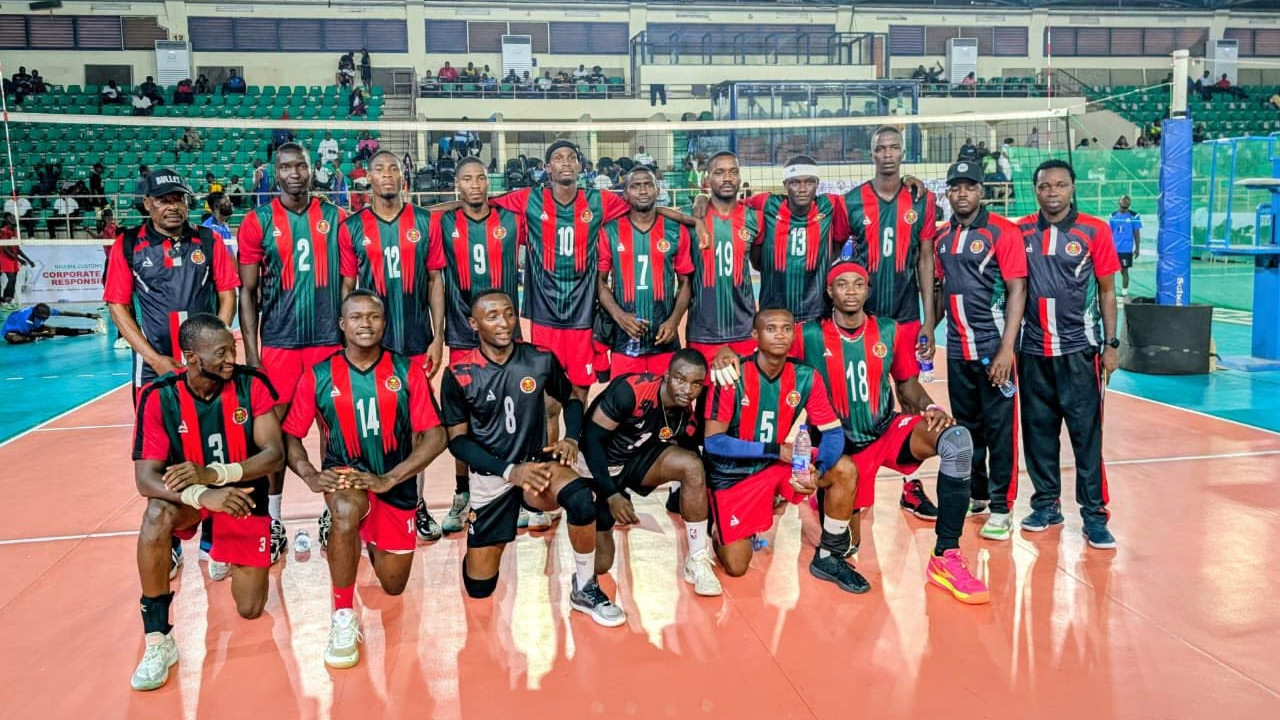
This is not an argument against Nigeria Customs, the Army, the Navy, the Police or any other institution that supports volleyball. Their involvement has created opportunities that the sport would otherwise struggle to provide. The issue is whether they should have to carry such a large part of the system in the first place.
A healthier volleyball structure should give private clubs room to grow alongside institutional teams. It should be possible for a young player to develop through a private academy, move into a well-supported private club and eventually reach the national team without having to wait for an institutional side to provide the financial security that makes a professional volleyball career possible.
That will not happen simply because companies are asked to “support sports.” There has to be a reason for them to see volleyball as something worth investing in. The federation, clubs, organisers and media all have a role to play in making the sport more visible, more organised and easier for companies to connect with their audiences. Sponsorship cannot always be about putting a logo on a jersey and calling it a partnership.

The real question is what happens to the player before that jersey becomes valuable.
Nigeria has no shortage of young volleyball players trying to make something out of the sport. What many of them lack is the support system that allows talent to develop into something sustainable. If sponsorship only comes when players have already become good enough for the biggest teams, then we are funding the finished product while leaving the development process to struggle.
The uniform has done a lot for Nigerian volleyball, and there is no reason to take that away from the institutions that have invested in the sport. But Nigerian volleyball should also be able to grow beyond dependence on the uniform. Private clubs need a fairer chance to build, grassroots programmes need support and companies need to see that investing in volleyball is not just about attaching a name to a team.
Nigeria,
It is also about helping create the players, clubs and communities that will keep the sport alive long after the current generation is gone.


“Sponsorship cannot always be about putting a logo on a jersey and calling it a partnership” this line is so true. Also sponsorship doesn’t always have to just be in cash format. Access to resources, trading gear, and facilities is also a form of sponsorship. We should explore these more. It will lighten the burden on clubs and the federation as a whole.
Good one.
But there re state teams in the league too as well. and there more than the others because those state teams have sponsors.